

Last month I was honored to attend and present at the FBI's 2026 East and West Active Shooter Conferences. There were a lot of really good presentations, and I thought it would be useful to share some of the takeaways. So here we go!
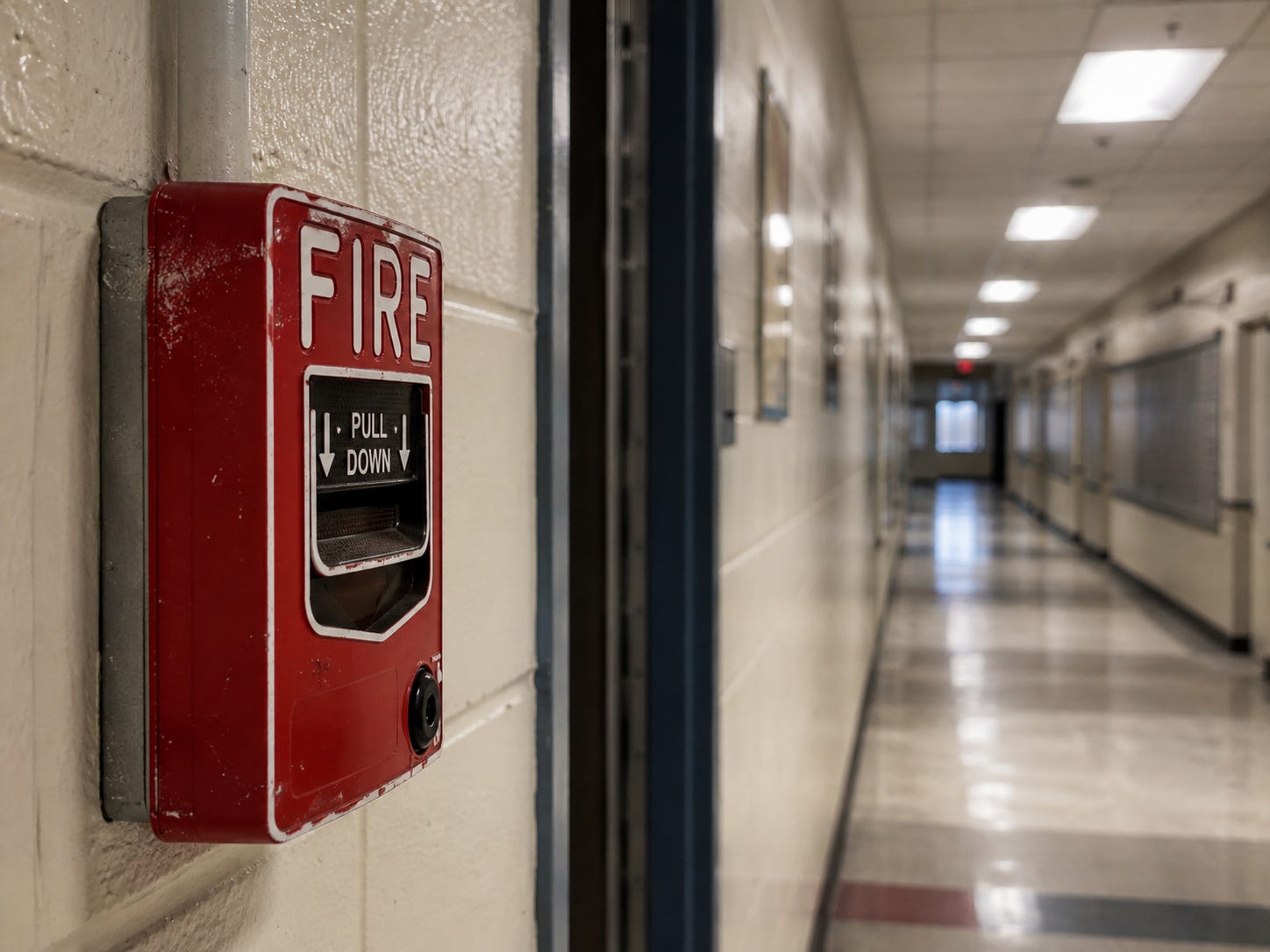
Fire alarms are still a problem
Fire alarms during active shooter events continue to be a problem. The problem comes in four varieties.
Gunfire sets them off. During the Covenant School shooting in Nashville, the shots the attacker fired to breach the interior doors of the vestibule triggered the fire alarms and started an evacuation by students and teachers. The shooter ran into the people who were evacuating and killed several of them. Gunfire and smoke have triggered fire alarms in a number of other active shooter events, going all the way back to Columbine High School in 1999. The same thing happened at Marjory Stoneman Douglas High School in Parkland, Florida, where smoke from the gunfire set off the alarm during the attack.
Attackers pull them on purpose. At a few events, shooters have intentionally pulled the fire alarm to get people to leave secured rooms or to draw them out into the open. The first attack to use this tactic was the Westside Middle School attack near Jonesboro, Arkansas in 1998, where one of the two attackers pulled the alarm and both opened fire on the students and teachers who evacuated. There have been other attempts since.
Bystanders pull them to warn people. In other cases, people aware of the attack pulled the fire alarm in a well-intentioned attempt to alert others. This happened at the Washington Navy Yard and Santa Fe High School shootings. The alarm might warn people that something is wrong, but it can also funnel them straight to the shooter.
Fire alarms can impair the police response. Officers are trained to move to the sound of gunfire. A blaring alarm masks that sound. At the Navy Yard, the Metropolitan Police Department's after-action report found that the building's layout, "along with the blaring fire alarm, made it nearly impossible to accurately determine from which area the shots were being fired." Officers there also had trouble hearing their radios over the alarm. The Covenant officers pushed through the same conditions, wailing alarms, and still keyed on the rifle fire, but the alarm made their job harder, not easier.
There is a partial fix already in the fire code. The National Fire Protection Association allows what is called a Positive Alarm Sequence (NFPA 72, Chapter 23). Under this sequence, the alarm signal goes first to a constantly attended location, usually a security desk or control room on site, instead of immediately sounding the general alarm. Trained personnel there have 15 seconds to acknowledge the signal. If they don't, the general alarm sounds. If they do, they have 180 seconds to investigate and reset the system. If they don't reset it in time, the alarm sounds automatically. If a second device activates during the investigation, the general alarm sounds immediately. Use of the system must be approved by the authority having jurisdiction, usually a fire marshal or fire code official.
One caveat. In older editions of the code, the delay applies only to automatic devices like smoke detectors. A pulled manual station still sounds the general alarm immediately. The 2022 edition allows manual stations to be included in the sequence if the local authority approves.
We can argue about the specifics of this system. But it allows a delay on the general alarm, and that delay could save lives during an active shooter event.
The wounded don't stay put
People who are injured during an attack often travel substantial distances from where they were shot. At the Florida State University shooting, responders found gunshot victims hundreds of yards from where they were shot. After the March 2026 shooting at Buford's, a bar on Austin's West 6th Street, an injured person left a blood trail and it took hours to locate him. Wounded people also turned up far from the scene at the Route 91 Harvest festival shooting in Las Vegas. This can create the impression that there are multiple shooters when there are not.
You need a way to end the lockdown
At FSU, presenters reported that officers destroyed about $600,000 worth of doors because people had barricaded themselves in and refused to come out. On top of the physical damage from breaching all those doors, imagine the psychological stress of having your door rammed or pried open by the police. A signal to end the lockdown could avoid both problems. An attacker could try to fake the all clear to draw people out, but if the same system that initiates the lockdown is used to end it, the signal should be reasonably secure.