
Cold Starts, Real Readiness
The case for spacing

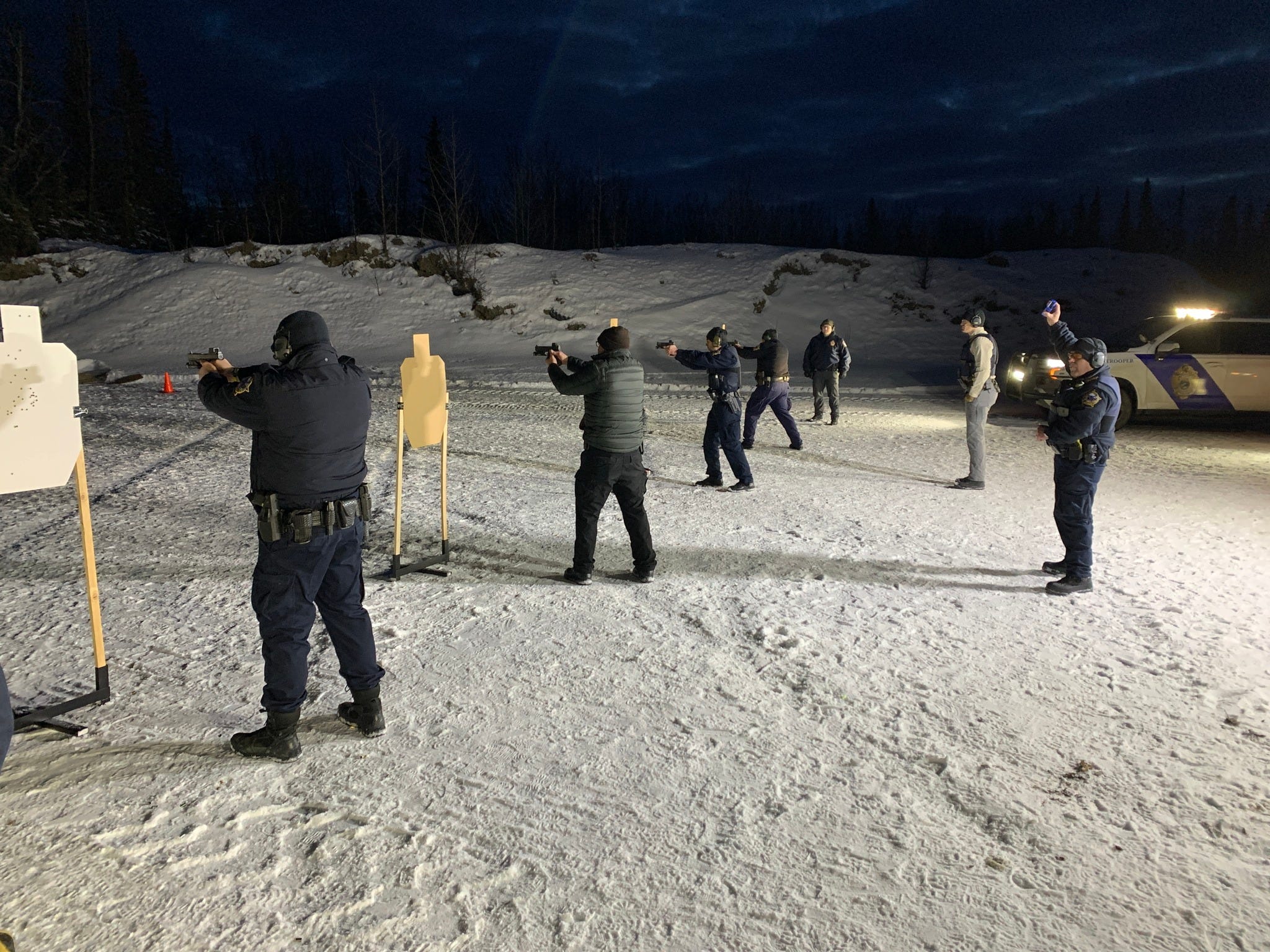
Most police training is scheduled like a vaccination. We line officers up once or twice a year, run them through a long day, check the box, and move on.
It feels efficient. It is also a reliable way to build skills that look good today and fade fast tomorrow.
A big part of the problem is that we confuse performance with learning.
Performance vs. Learning
Performance is what you can do right now, under today’s conditions.
Learning is what you can still do later. You demonstrate it by a change in performance over time, especially after time away, after stress, or in a new context.
Traditional training schedules are built to maximize end of day performance, not learning across weeks and months.
Range Day: A Simple Example
Almost everyone shoots better at the end than they did at the start. They are warmed up, tuned in, and living inside the same drill. Groups tighten. Timing improves. The sights settle down.
The real question is what that same officer looks like cold. First rounds. No warm up. Three weeks after the last session. That is where you see what actually stuck.
Why End of Day Scores Fool Us
If you practice the same skill for eight straight hours, you can get pretty good by the end. Everyone can see it. It feels like progress.
But a lot of what improves during a long block is short term performance: familiarity, coaching cues that are still fresh, and the momentum of repetition. Those boosts are real, but they do not guarantee the skill will be available later.
If you want a simple way to tell the difference between performance and learning, watch the first few reps of the next session. In trainer language, watch what happens when they are cold.
Cold Reps Are The Test
End of session reps are often inflated by the conditions of practice. Cold reps show what the trainee can retrieve and organize without being carried by the flow of the day.
If officers need five or ten reps to wake the skill back up, the skill is not stable. It is not available on demand. It is not learned in the way policing requires.
This is exactly why spacing works.
Spacing Forces Learning
Spreading practice out over time produces stronger, longer lasting learning than cramming the same hours into a small number of big blocks. This is one of the most consistent findings in learning research.
Spacing helps because time away introduces just enough forgetting that the trainee has to retrieve and rebuild the skill. That retrieval effort is not a flaw in the design. It is the mechanism. Reconstructing a skill strengthens it and makes it easier to access under pressure.
Why Policing Should Care
Policing is full of perception-action skills: firearms, defensive tactics, driving, medical, communication, decision making, de escalation. These are not knowledge only tasks. They blend judgment with coordinated action under changing conditions.
Those skills do not need to look good at 4:30 p.m. on training day. They need to be available at 2:00 a.m. six weeks later when the environment is hostile and the stakes are real.
Spacing is one of the simplest upgrades we can make to move training toward that goal.
Same hours, different packaging
If you have eight hours to train, you can spend them one of two ways:
Option A: one 8 hour day
Option B: four 2 hour sessions, or eight 1 hour sessions, spread across weeks
Option A will usually produce higher end of day performance.
Option B will usually produce better learning, meaning better retention and better cold performance later.
If your goal is to look good on the last run of the day, cram.
If your goal is to perform later, space.
What Agencies Can Do Without Adding Hours
Micro dose in service - Replace occasional long blocks with shorter recurring sessions tied to shifts.
Revisit core skills on a schedule - Build a cycle where key skills reappear repeatedly across the year, not once.
Use cold performance as your report card - Track how officers look on the first few reps of each session. If they snap back quickly, learning is taking hold. If they need a long runway every time, your plan is producing short term performance, not durable capability.
A simple challenge
Run a 90 day pilot. Keep the total training time the same, just split it up. Pick one skill area, firearms or defensive tactics. Schedule short recurring sessions instead of a single block.
Then measure one thing: cold performance at the start of each session.
If cold performance improves across the pilot, you built learning. If it does not, you learned something useful and you can adjust without having wasted a year.
Spacing is a low drama change with a high payoff. If we care about operational readiness, we should stop cramming and start spacing.
This post discusses one of the topics in this chapter on police training that is currently under review for an edited book.
Totally agree with this concept. I test myself frequently on this at the range as a retired officer.
I do the drill cold, then use the skills to make satisfactory improvements before moving on. This involves distances of no more than 10 yards, starting at 1 and moving out to 10. This will cover in close contact with assailant, during contact. Same can be applied with duty rifle/ shotgun. Starting at 10 plus, with cover, etc.
Like Mike Waidlich did with the Bakersfield, CA PD.