
Exercise Bikes?!
You already know what works - Why doesn't your training utilize it?

I want to tap into your intuitions to develop a clearer understanding of skill acquisition and development. Stick with me—this ties back to first responder training, but let’s start with a relatable example.
Here's your challenge: You want to teach this kid how to ride her bike.
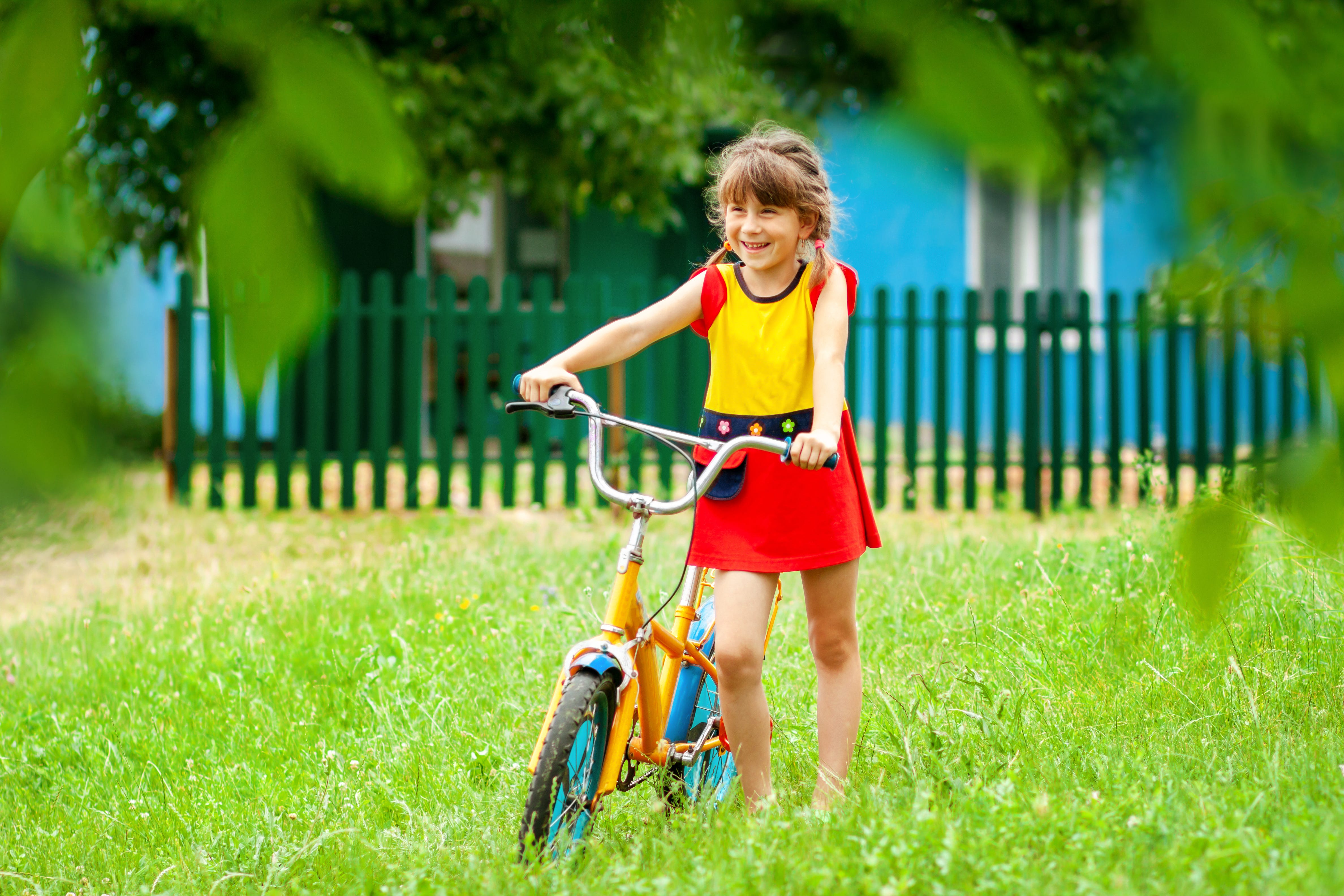
How would you do it? Assume you're not ready to just toss her on and hope for the best (I know, some of you might say exactly that). I'll narrow it down to three options:
First: You could lecture her about bike riding—covering form, balance, parts, or even the physics.
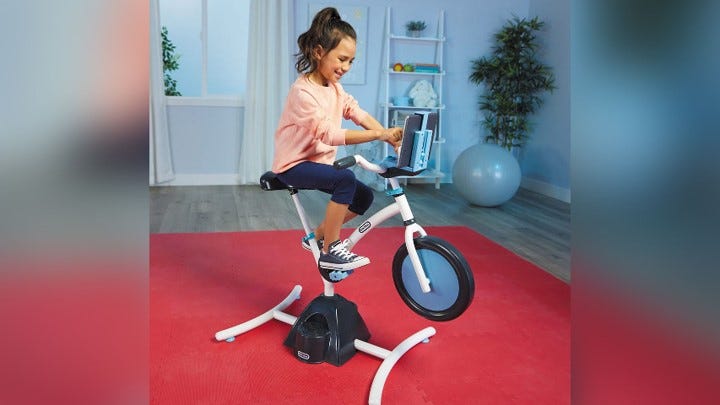
Second: You could stick her on a kid-sized exercise bike like the one above (and yes, I think it’s sad that they have kid sized exercise bikes).

Third: You could hand her a balance bike like this one. It’s like a regular bike but it doesn’t have pedals.
Which do you choose?
Lecture
Exercise Bike
Balance Bike
I’m going to make a bold guess that most of you picked the balance bike. Now, the next question is: why? Take a second and think it over.
Your reasoning probably goes something like: “Balancing is key to bike riding, and the balance bike helps her learn that in a way that feels like riding a real bike.” If that’s your reasoning, I agree.
Now, let me put that into the language of Ecological Dynamics (EcoD). One of the invariants (things that don’t change) of bike riding is balancing while moving. The balance bike affords practicing this in a representative way—meaning it's akin to the actual skill of riding a bike. These terms might sound like fancy jargon, but they explain what makes the training effective.
The balance bike simplifies the more complex task of bike riding. In EcoD, this is called task simplification—making it easier while keeping it representative of the full skill. When she starts, her feet touch the ground easily, which builds confidence. Removing pedals simplifies the task, allowing her to focus on balancing. As she improves, the seat height can be adjusted, simulating what she’ll do on a real bike. Once she's mastered balance, we add pedals for her to focus on.
I bet you didn’t think much about lecturing her on the 'proper form' for riding the balance bike. You’d probably just put her on it and let her figure it out, right? You might give a tip if she’s struggling, but mostly you'd let her learn through play. We’ll come back to this point shortly.
Now, let’s consider the exercise bike. Most of you didn’t choose it—why? It looks like a real bike, right? It even has pedals, which are crucial, right? Yet instinctively, you knew the exercise bike isn’t quite right—it’s missing something essential. In EcoD terms, it’s a decomposed task—teaching pedaling but isolating it from other vital parts of the bike riding skill - like balancing.
So here’s the twist: Many of the training tasks we use for first responders are like exercise bikes. They look similar to the real thing but don’t transfer well to real-world situations because they’re missing key components. For example, hitting a heavy bag with a baton looks something like hitting a person with a baton, but the activity won't transfer to the streets very well. The good news? There’s a better way. That better way is the Constraints Led Approach (CLA). But before I get to that, I want to explore the basics of skill acquisition a little more.
Tell me how you ride a bike. Seriously, tell me how you do it. Your first thought might be, 'I just ride.' If you took more time, you would come up with some ideas, but they wouldn’t be entirely accurate. Don’t feel bad—even elite athletes can’t explain exactly how they do what they do. Ultimately, you don’t know how you ride a bike, at least not consciously. Yet, somehow, you still know how to ride a bike. You know how to do it implicitly but not explicitly.
Now put your coaching hat back on. Many of you have taught others to ride bikes. Under the traditional model, how is that possible? How could you possibly break down the task and teach someone the “right” way to do it when you don’t even know how you do it?
Now add to that the reality that everyone’s body is different. Some are taller, heavier, or stronger. Given that, their approach to riding will likely differ from yours. So could you really teach them their 'right' way, even if you knew yours?
On top of that, the 'right' way to ride changes based on the environment. Going uphill is different than down, riding on pavement is different than grass, and on and on. Do you have to teach them the right way for all of those situations as well?
So I think you are probably getting the gist of where I am going, but let me add one last thing. Think about the things that you are truly expert at. The skills we are all so good at, like walking and grabbing, that we take them for granted. We are all experts at these skills. We don’t (usually) think about walking, but we can walk safely and effectively in almost any environment. The same goes for grabbing. We can easily grab and manipulate an incredible number of vastly different objects. We also know instantly when something is at the edge or outside of our capacity to grab and manipulate.
How did we get so good at these things? The short answer is that we practiced them in an environment that was like the performance environment. Did we need a coach? If you have kids, did you coach them on how to grab things? You didn’t. At least not in the traditional way, but you probably did in an EcoD way. You put things in your kid’s environment for them to interact with. So they learned how to grab different objects. You moved the objects around so that they learned how to reach for them and so on. Over time, your kids became expert grabbers and I bet never once did you tell them the right way to grab something. This is EcoD based training.
Skill Development Under EcoD
Above, I tried to lead you to understand the EcoD model intuitively. Here I am going to spell out some key concepts/assumptions.
People are Amazing Learners
Humans are incredible learners! Your mental and physical hardware are awesome at figuring out how to do things. If you mess with something, you'll figure it out through trial and error, usually by setting a goal and experimenting until you achieve it. I don’t have to tell you the specifics of how to achieve the objective. If you already know how to do it, your body will automatically organize to achieve the objective. If you don’t know how to achieve it, your body will figure it out through practice. In EcoD, this is called self-organization.
Everyone and Every Situation Is Different
Skill development is all about learning how to achieve an objective under various conditions. Whether the person will succeed or not is always an interaction between their abilities and the environment they are operating in. We want them to learn what opportunities they have for action. In EcoD, these opportunities for action are called affordances. It is critical that these are always viewed as interactions between the person and environment. Because no two people are the same, no two people share all the same affordances. Because the environment is constantly in flux, no two situations provide the exact same affordances. A huge part of skill development is learning to spot these affordances. This is referred to as the education of attention. People can only learn to spot affordances by practicing in an environment that reflects the key characteristics of the performance environment.
Perception and Action Must Be Linked
It is not enough for the learner to simply see that an affordance exists. They must be able to actually do what is afforded. That is they must not only see the opportunity, they must also learn when and how to take the opportunity. This again is only learned by trial and error. The learner sees an opportunity and tries to take advantage of it. They see if it works and adapt accordingly. This is a loop between perception and action that must be present to learn. You can’t learn to act effectively if practice doesn’t link perceptual cues to actions. Hitting a heavy punching bag does not teach me how to hit an uncooperative and unscripted opponent.
There’s Lots of Variation, but There’s Consistency Too
While there is a lot of variation in affordances, this doesn’t mean that everything is random. You see a considerable amount of variation in what professional athletes do, but you also see similarities. This is because some things work better than others. While bodies are different, they still have similarities. Physics works in a consistent way too. In EcoD, stable and efficient solutions are called attractors, and there are often multiple attractors. We also want learners to have more than one solution for any movement problem - we want them to find the different attractors.
What Does the EcoD Coach Do?
You should be seeing that the EcoD model of coaching is very different from the traditional model of the coach who is the expert and shows you the right way to do things. In EcoD, the coach is not going to give you demo and then have you rep it out while giving you feedback to drive you ever closer to the correct technique.
So what exactly does the coach do? In a nutshell, the coach/trainer creates practice activities (problems) that allow the trainee to explore and find solutions to the problem. To do this, the coach must understand the key objective(s) in the situation. The coach then designs activities around achieving the objective(s). The objectives help the trainee understand what is important in a given situation. In EcoD, this is called the education of intention. Choosing the right objective(s) requires the coach to have a deep understanding of what is happening in a given situation. The coach’s expertise lies not in giving the trainee the answer, but in understanding the situation well enough that he can design activities that allow trainees to discover their answers.
If we take this all back to the balance bike, the coach sets an intention. Say, ride the balance bike from point A to point B using her feet as little as possible. She adopts this intention. This focuses her attention on moving the bike between the two points and balancing so that she touches her feet as little as possible. The coach trusts that she will self-organize to find solutions that work for her. If she struggles, he lets her struggle a bit to see if she figures it out. If she keeps struggling, he can change the task to make it easier (maybe by having her go down a small incline) or he might suggest something to help (like - what happens if you go a little faster?). As soon as she shows she can do the task consistently, the coach changes it up. He might have her go further or add a turn for example.
This is the Constraints Led Approach in action. In the next post, I’ll take a deeper dive into this framework.