
Great Reps, Wrong Task
Clean training performance is a warning sign

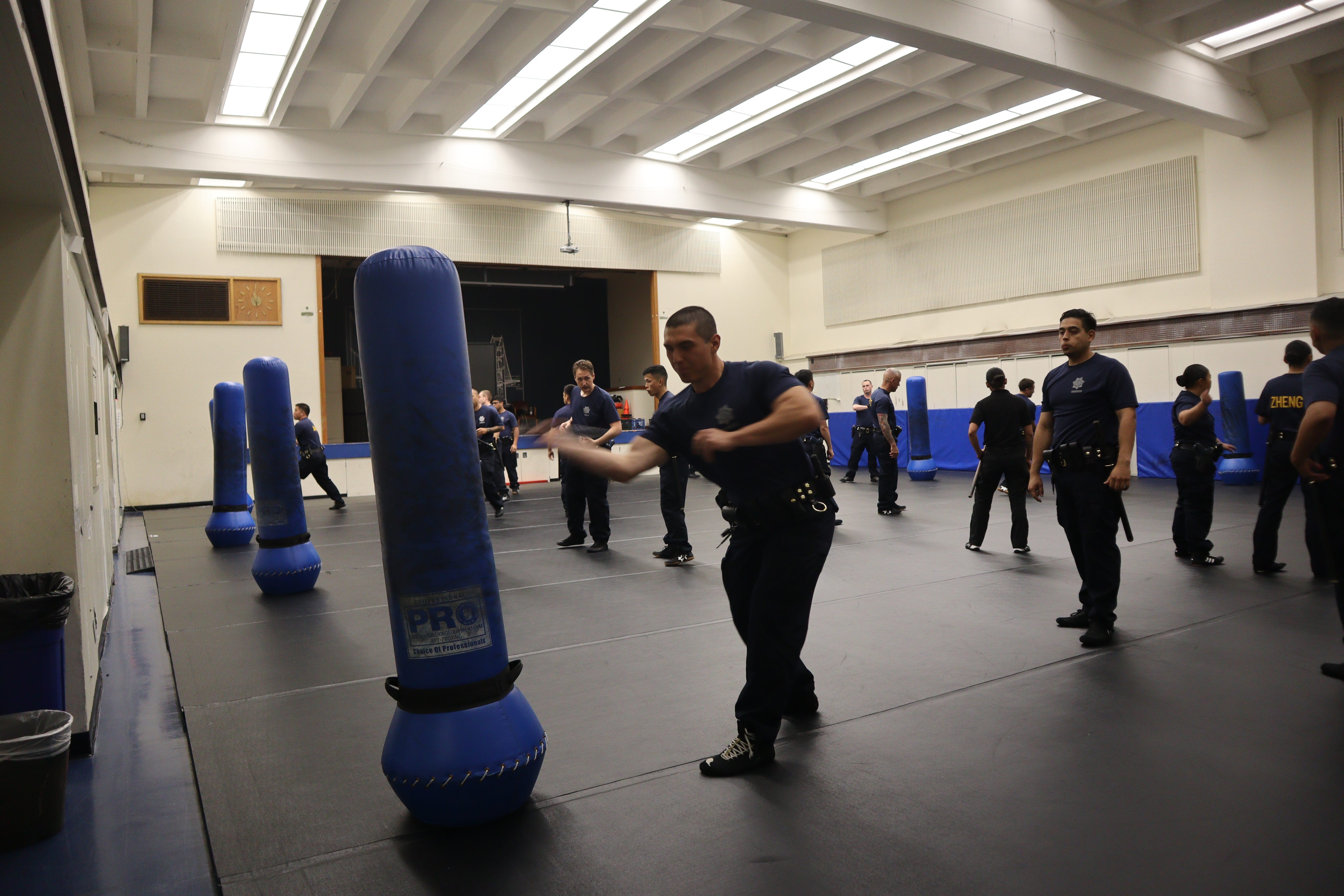
Most conversations about police training start with hours. More advanced conversations turn to spacing the available hours and interleaving the training material. These are good moves. They can improve retention, and they can help transfer, but only if the right thing is being trained.
That “Only If” Matters
There is a deeper issue than hours and scheduling. It is the specific tasks we ask officers to practice and the environment we build around those tasks. The real question is: what do our training activities actually teach officers to do?
This is where ecological dynamics and the Constraints-Led Approach (CLA) earn their keep. They force a different question than “Did we cover the material?” The question becomes: what kinds of problems does the training allow officers to solve?
That shift redefines skill. Skill is no longer a specific technique. Skill is functional adaptability, shown by achieving a desired outcome under a variety of conditions.
Traditional training often treats skill as a technique problem. There is an ideal way to do something. We demonstrate it, explain it, then drill it until it looks consistent. Variation is treated as error.
EcoD starts from a different premise. In policing, the environment is not stable. People move. Information is incomplete. Threat levels shift. Bystanders appear. Partners do unexpected things. Time compresses. If you want performance in that world, training has to build adaptability, not just a consistent technique.
And the only way to build adaptability is to require adaptation during training.
Information Drives Action
A big part of adaptability is being able to read the situation and pick up the information that should drive action.
One of the most practical EcoD ideas is perception-action coupling. In real encounters, officers perceive something meaningful and act in response. The perception and the action are linked. That means training has to contain information that is similar to what officers will have to use in the field. If the relevant information is missing, the skill you care about cannot develop.
A lot of training lacks that information. It doesn’t represent what officers actually face.
We give officers an audible start signal instead of requiring them to recognize when something has changed.
We tell them what’s coming instead of requiring detection.
We practice movements without the cues that would actually trigger those movements in the field.
We treat communication and coordination as an after-action discussion instead of part of the problem itself.
When you do that, you can get very clean performance. You can also end up with skills that are tightly tied to the training setting because officers are not learning to regulate action off the information they will actually have on the street.
CLA Gives You A Methodology
EcoD is the theory. CLA is how you design training from it.
CLA says instructors do not “install” the right technique. They shape the environment so trainees are pulled toward effective solutions. You do that by manipulating constraints.
Constraints come in three types. Individual constraints are things like fatigue, fitness, experience, fear, attention, and stress tolerance. Task constraints include rules, equipment, goals, time limits, and scoring criteria. Environmental constraints cover space, lighting, noise, terrain, and the presence of bystanders or partners.
This is practical. You keep the objective stable and vary constraints in controlled ways so the learner has to adapt. That is how you build robust performance without turning training into chaos.
Transfer Is Not A Trick, It’s Task Similarity
This is where the transfer conversation usually goes wrong.
If training and performance contexts are meaningfully different, you are counting on far transfer. Far transfer is rare and unreliable. Far transfer means learning something in one context and applying it in a very different context—like expecting static range work to prepare officers for dynamic shootings where they must identify threats, move, communicate, and make split-second decisions all at once. That is not a failure on the part of the trainee. It is a design issue. The system trained one task and expected it to generalize to a different task.
The most reliable way to get transfer is to stop depending on far transfer. Near transfer keeps the core task demands similar—the information officers must read, the decisions they must make, the timing pressures they face—while varying the details. Redesign practice so the training task is similar to the job task in the ways that matter: the information, the decisions, the timing, and the coordination demands. Then you are living in near transfer territory, and near transfer is where learning reliably carries.
That is what “representative” training means. It does not mean unsafe scenarios or random complexity. It means the training task contains the same informational and decision demands that define performance in the field, scaled to be safe and coachable.
In scenario training: partners have to coordinate in real time using partial information, not execute a scripted sequence everyone already knows.
In de-escalation work: officers read behavioral cues to guide their response, not follow a predetermined script.
Range Training Really Makes The Point
Range training is useful. It is also the clearest example of how training can drift away from the operational problem.
Most qualification-style work looks like this:
known course of fire
known distances
static target
audible start signal
a focus on execution
Performance here measures something real. It builds a certain capacity. But it also removes many of the constraints that shape real shootings, especially the decision problem. Officers use firearms in the field because a deadly threat presents itself, not because a timer beeps.
An EcoD and CLA lens does not say “stop doing range work.” It says stop treating range work as if it covers the operational task. Build tasks that preserve safety while restoring critical constraints in controlled ways.
Fundamentals?
This is the part people often mishear.
In a traditional model, “fundamentals” often means techniques: the four-point draw, the high-friction grip, the specific stance, the exact way to do the thing.
EcoD reframes that. Techniques are not fundamental in the strong sense people usually mean. They are tools that emerge because they work for a particular person, under particular constraints. Change the person or change the environment and the best technique can change. Look at elite golfers at the end of their backswing—they are all in very different positions. Are their fundamentals wrong, or are they doing something adapted to how their body works?
What is fundamental is the objective and the ability to achieve that objective under different constraints. Techniques are options officers can learn and refine, but they have to be nested inside the problem they are meant to solve.
You can see the risk of technique-as-fundamental under time pressure. There is a study where a driver pulls a gun on an officer during a traffic stop. Most officers were close enough to grab or deflect the weapon. Very few did. Instead, most back-pedaled or sidestepped, drew their weapons, and began firing two-handed. The suspect fired less than half a second after presenting the gun. Officers took 1.5 seconds or more. Attempting to grab the suspect’s gun and then drawing and firing one-handed may have worked better in this scenario, but the officers had practiced the two-handed shooting process far more than anything else—so that is what they did under stress. The environment does not care that the form looked clean. It cares whether the problem got solved.
So when I say “build fundamentals,” I mean define the objective clearly and train officers to solve that objective across a range of realistic constraints. Techniques become tools in service of the objective, not the objective itself.
If you want the longer version of that argument, check out this link: https://tacticalscience.substack.com/p/rethinking-fundamentals
A Quick CLA Checklist For Task Design
Set a clear goal that the student and instructor both understand.
Constrain the activity to afford learning. Make the goal simple enough that the student can have some success, but not so simple that they always succeed. Adjust constraints to keep it challenging as the student improves.
Repetition without repetition. Don’t obsess over matching a single form. Focus on whether the learner achieves the goal. Different solutions are a feature, not a bug.
Representative design. Make the information in the activity similar to the information the officer will use in the field. Officers use their firearms because a deadly threat presents itself, not because a timer beeps.
If you evaluate existing training tasks honestly using this checklist, many standard activities will reveal missing elements. Not because they are useless, but because they were built for standardization and compliance rather than adaptability and problem solving.
The Takeaway
If you want readiness, stop asking whether officers “did the reps.”
Ask whether the reps contained the information, decisions, and constraints that define the job in the field.
If they didn’t, the training may look great, but it is preparing officers to perform in a place that does not exist.